

Ransomware:
The Ultimate Threat Facing Modern Enterprises
Ransomware attacks have become a universal threat to organizations of all sizes and industries. Proactive prevention and a well-planned security framework are the most effective ways to defend against ransomware.
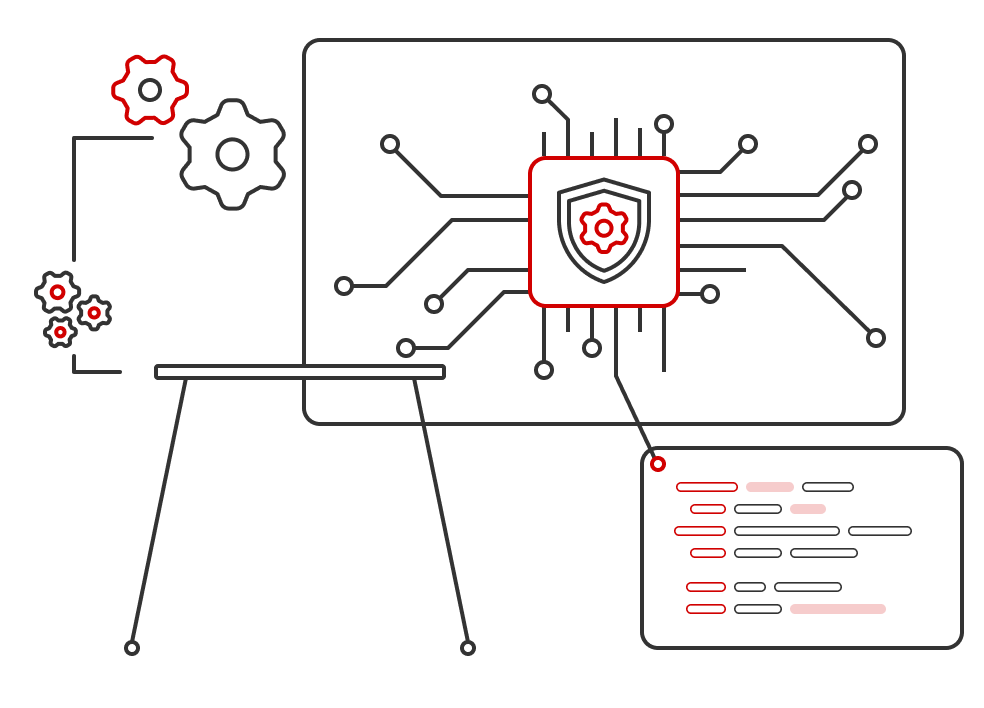
Global Ransomware Overview & Common Tactics

Market Situation:
As of September 2023, there are over 20 active ransomware families in the market, with LockBit being one of the most influential.
Mode of Operation:
Since 2020, LockBit has expanded its reach via an affiliate model; its affiliates employ multiple tactics to infiltrate organizations and critical infrastructure.
Attack Techniques:
- Double extortion (encryption + data-leak threat)
- Use of Initial Access Brokers (IABs) to rapidly gain entry into target networks
- Advertising on hacker forums to recruit attackers and insiders
- Hosting hacker competitions to attract technical talent
Global Ransomware Overview & Common Tactics

4+ Weeks of Core Production Impact
Global Reputation Damage
Core Data Exfiltration
Regulatory Inquiries

Build a Comprehensive Defense Framework
Defending against ransomware requires enterprises to establish three core capabilities: Preparation, Protection & Detection, and Response. Cloudfall provides end-to-end services to ensure comprehensive protection and rapid incident response.Built on DevSecOps and agile principles for continuous innovation.

Backup & Recovery
Ensure successful data restoration in the event of a ransomware attack.

Network Share Access Permissions
Review network share usage to prevent ransomware spread, ensuring write access is limited to a minimal number of users and systems.

Info Security Awareness Training
Ransomware is often triggered by email or malicious link clicks. Continuous employee awareness training is essential to reduce the risk of ransomware attacks.


Managed Security Services
The Managed Security Services Significantly enhances network and endpoint defense capabilities while providing robust protections against unknown malware

Managed Detection & Response

Managed Email Security
Managed Security Awareness
Managed External Security Monitoring

Managed Cloud-Native Security
Managed LeaDatakage Protection
Ransomware Incident Response & Recovery Guide
Ransomware has rapidly emerged as one of the most serious cyber threats facing organizations worldwide, with an unprecedented scope and destructive power.
Immediate Containment & Evidence Preservation
- Disconnect affected endpoints and networks to halt further spread.
- Retain logs, disk images, and memory snapshots; avoid removing evidence.
- Appoint a single point of contact and regulate internal communications.
Impact Assessment & Initial Investigation
- Determine which business functions and data have been compromised; assign priorities.
- Perform log and traffic analysis to identify signs of lateral movement.
- Evaluate whether notification to partners, regulators or insurers is required.
Root-Cause and Remediation
- Use forensic analysis to trace the attack chain and ingress point.
- Identify the initial compromise vector (e.g., phishing, vulnerability, weak credentials).
- Before restoring systems, block the same entry paths to prevent reinfection.
Recovery & Long-Term Hardening
- Restore systems and data from verified offline backups.
- Force a reset of affected credentials and access keys.
- Conduct a post-incident review, patch vulnerabilities and improve monitoring and response workflows.